
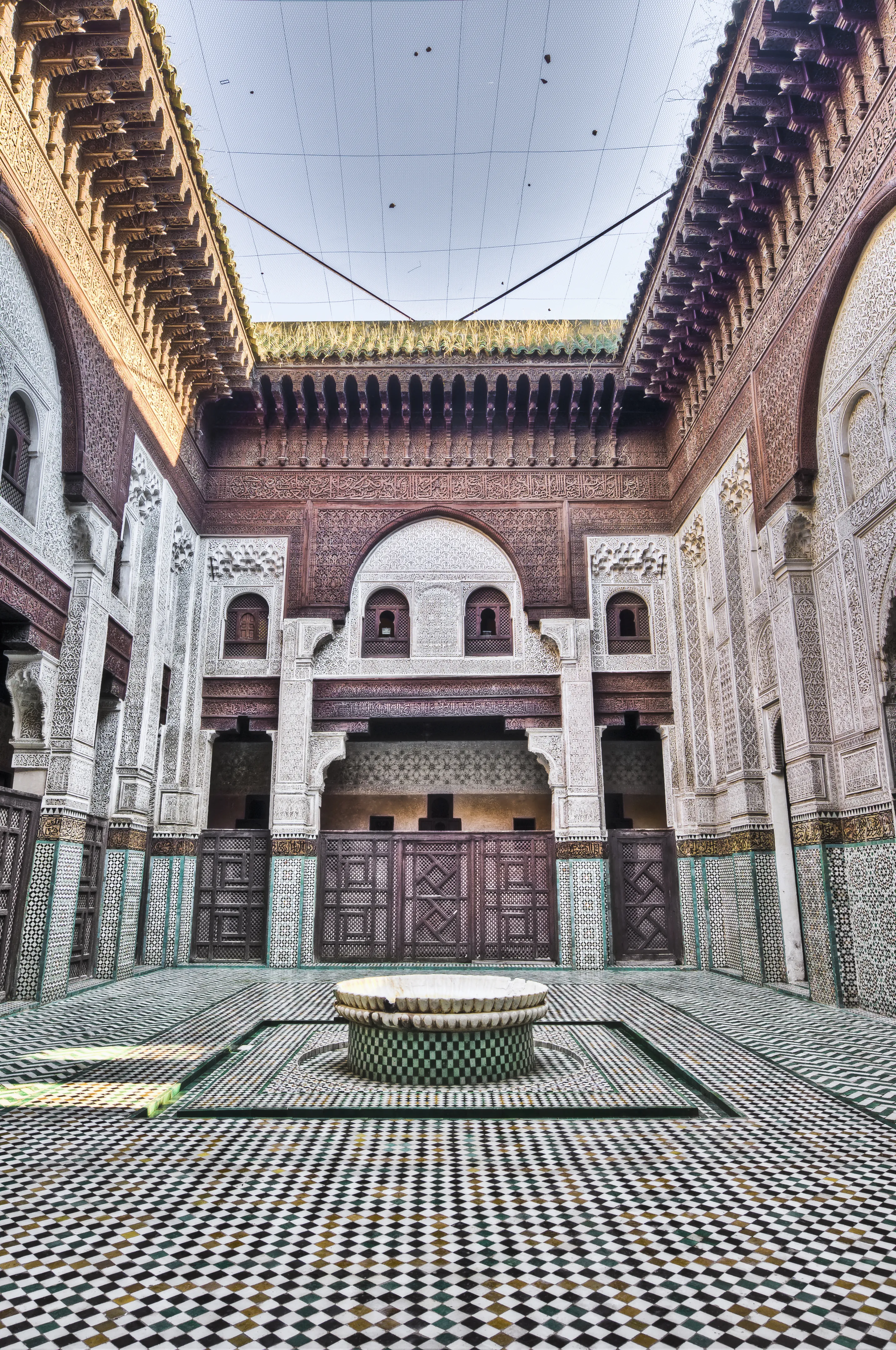
Zellige (also spelled Zellij) is far more than just a tile; it is a definitive expression of Moroccan identity and a masterpiece of universal art. Originating in the 10th century in North Africa and Andalusia, Zellige consists of individually hand-chiseled geometric tiles set into a plaster base. This intricate mosaic work has adorned the walls, fountains, and floors of palaces, madrasas, and mosques for over a millennium.
Unlike mass-produced ceramics, authentic Zellige relies entirely on the raw materials of the land and the skill of the artisan. It is the ultimate marriage of handcrafted Moroccan tiles, the unique pale clay of Fez, and the spiritual complexity of Islamic geometric patterns.
The Golden Age: The Marinid Dynasty
While the techniques of mosaic tilework existed earlier, the true "Golden Age" of Zellige flourished under the Marinid Dynasty (13th–15th century). It was during this era that the craft reached its zenith in complexity and color palette. The Marinids, ruling from their capital in Fez, patronized the arts heavily, using Zellige to decorate theological colleges (madrasas) and civic buildings.
This period established the aesthetic standards that we recognize today. The complexity of the geometric tessellations became a visual language of power and piety. Beyond Morocco, the influence of this craftsmanship can be seen in the breathtaking Alhambra Palace in Granada, Spain—a UNESCO World Heritage site that stands as a testament to the shared Moorish heritage of the region.
The Maâlem’s Craft: From Earth to Art
The creation of Zellige is a labor-intensive process that has remained virtually unchanged for centuries. It begins with the unique, iron-rich pale clay found only in the Fez region. The master craftsman, or Maâlem, oversees a process that defies the speed of modern manufacturing:
- Clay Preparation: The raw clay is soaked in water, kneaded by hand (or foot), and filtered to remove impurities.
- Molding: The refined clay is hand-molded into square tiles approx 10cm x 10cm.
- Sun Drying: The tiles are left to dry naturally under the Moroccan sun.
- First Firing & Glazing: The tiles are baked in traditional kilns fueled by olive pits. They are then dipped in enamel glazes of various colors—emerald green, cobalt blue, honey yellow, and ancient white.
- The Menqach (The Cut): This is the defining step. The Maâlem draws a shape on the glazed tile and, using a sharp, heavy hammer called a Menqach, hand-cuts the tile into precise geometric shapes (stars, octagons, diamonds).
This manual cutting process creates the signature "imperfect perfection" of Zellige. No two tiles are exactly identical. The slight variations in shape and the surface irregularities of the glaze catch the light in a way that factory-made tiles simply cannot replicate.
Spirituality in Geometry
The dazzling patterns of Zellige are not merely decorative; they are deeply spiritual. In Islamic art, there is a tradition of aniconism—the avoidance of representing sentient beings (humans or animals) in religious contexts. Instead, artists turned to geometry to express the divine.
The infinite, repeating nature of Islamic geometric patterns symbolizes the infinite nature of God (Allah). A single star pattern can theoretically extend forever in all directions, representing the underlying order of the universe. When you look at a Zellige wall, you are looking at a visual meditation on eternity and unity.
Modern Application: Timeless Interiors
Today, Zellige has transcended its traditional roots to become a coveted element in modern interior design. Designers around the world prize it for its texture, depth, and authenticity. It is frequently used to add warmth to minimalist kitchens, creating shimmering backsplashes that contrast beautifully with sleek cabinetry. In bathrooms, Zellige showers offer a spa-like, organic feel that connects the bather to the earth.
Whether used as a dramatic feature wall or a subtle accent, Zellige brings a thousand years of history into the contemporary home, proving that true craftsmanship never goes out of style.
Bring History Into Your Home
Experience the authentic touch of the Maâlem.
View our Authentic Collection